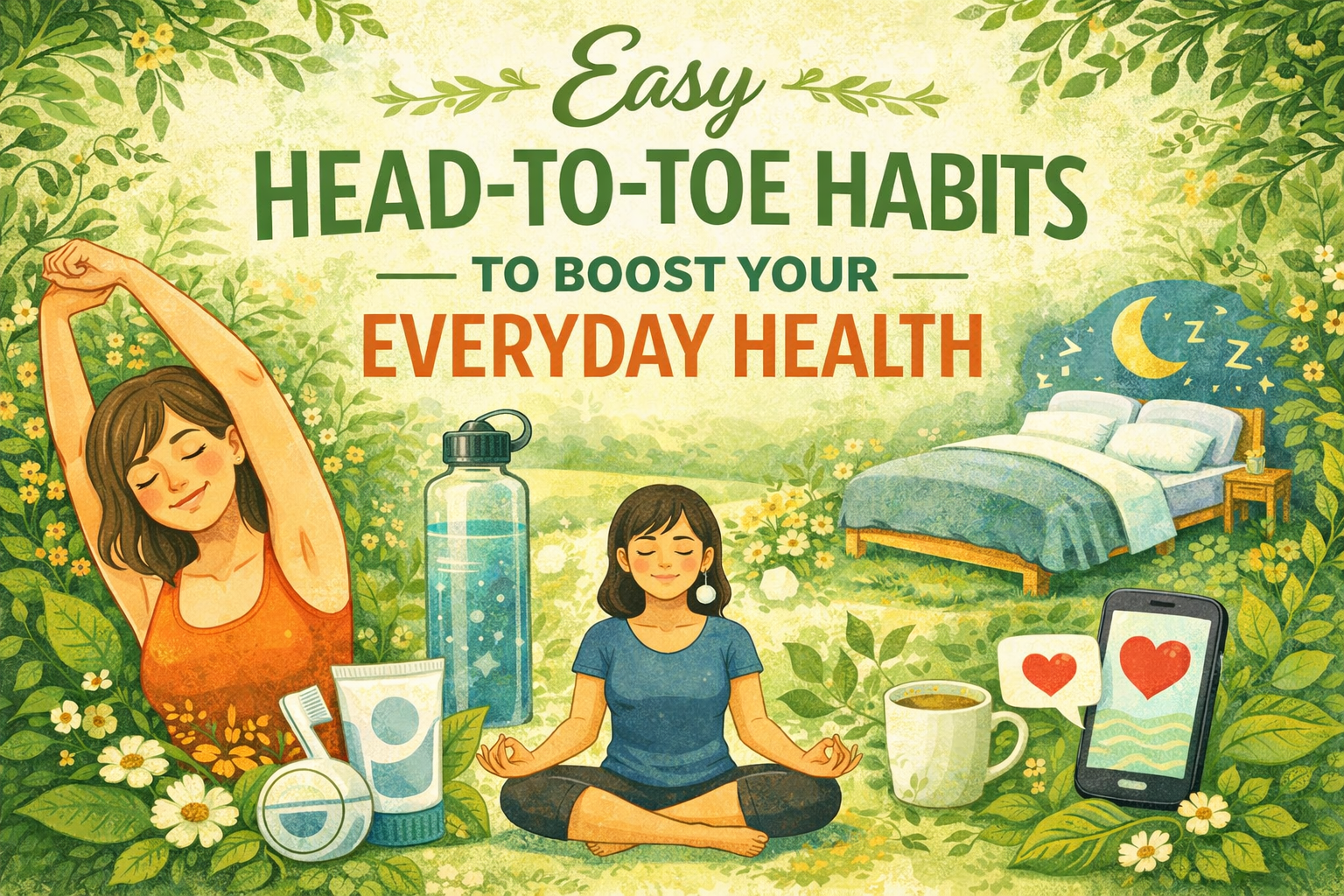
Easy Head-to-Toe Habits to Boost Your Everyday Health

Lifestyle | Wellness
Easy Head-To-Toe Habits to Boost Your Everyday Health
Busy life. Heavy calendar. Too much advice. Here’s the simpler route: practical habits that support your body from head to toe without demanding a full life overhaul.
By Jesse Clark | Contributor
Website: Soulful-Travel.com
Busy parents already juggling work, caregiving, and a packed calendar often want everyday well-being, but the loudest advice demands a total life overhaul. The real tension is consistency: good intentions get buried under stress, decision fatigue, and the feeling that self-care routines have to be perfect to count. A simpler, kinder approach is possible through head-to-toe health habits that support the whole person, using holistic health strategies that feel doable on ordinary days. With the right daily wellness practices, small choices can start to add up.
Head-to-Toe Habits You Can Repeat All Week
These practices work because they are simple enough to repeat, even on busy days. Pick a few, keep them consistent, and let confidence grow as your body responds over time.
Two-Minute Stretch Reset
What it is: Do gentle neck, shoulder, and calf stretches; stretching is a component of overall wellness.
How often: Daily, especially after sitting.
Why it helps: It reduces stiffness and makes everyday movement feel easier.
Lights-Down Sleep Window
What it is: Set a realistic bedtime target that supports 7-9 hours of sleep.
How often: Nightly.
Why it helps: Better sleep improves mood, energy, and decision-making.
Five Breaths Before Reacting
What it is: Pause and take five slow breaths before answering a stressful moment.
How often: As needed, multiple times weekly.
Why it helps: It lowers tension so you respond with more patience.
Water First, Caffeine Second
What it is: Drink a glass of water before coffee, soda, or tea.
How often: Daily.
Why it helps: It supports hydration without requiring perfect tracking.
Brush, Floss, Done
What it is: Brush for two minutes and floss one pass before bed.
How often: Daily.
Why it helps: It protects gums and reduces next-day “ugh” feelings.
One Real Check-In
What it is: Send a caring text or voice note to someone you trust.
How often: Weekly, or twice weekly.
Why it helps: It strengthens support when life feels heavy.
“Small choices can start to add up.”
Make Each Habit Easy: Plug-and-Play Routines From Morning to Night
When it comes to keeping your sanity in the face of anxiety and overwork, small habits work best when they’re attached to things you already do. Use these plug-and-play routines to turn the head-to-toe basics, movement, sleep, stress care, hydration, skin, oral health, and connection, into a normal day.
- Do a 60-second “wake-up stretch” before your feet hit the floor: Point and flex your ankles 10 times, do 5 slow neck turns each way, then reach both arms overhead for 3 deep breaths. This tiny sequence loosens stiff joints, wakes up your nervous system gently, and makes “daily stretching tips” feel realistic, even on busy mornings. If you forget, pair it with something automatic like turning off your alarm.
- Build a 10-minute bedtime runway (same three steps, most nights): Pick three cues you can repeat: dim lights, wash face, then a paper book or calming music. The bedtime routine benefits add up because your brain starts recognizing the pattern as “power down,” which can make it easier to fall asleep and protect your next-day mood and cravings. Keep it flexible: late night? Do the “mini version” (lights + face wash + 60 seconds of breathing).
- Use a “2-minute reset” for stress, especially between tasks: Try this simple combo: inhale for 4, exhale for 6 (5 rounds), then unclench your jaw and drop your shoulders. This is one of the easiest stress-reduction techniques because it fits into real life: before a meeting, after school pickup, or when you feel yourself scrolling. The goal isn’t to be calm all day, it’s to return to baseline faster.
- Cleanse skin like you’re protecting a barrier, not scrubbing a stain: At night, use lukewarm water and a gentle cleanser, then pat dry and moisturize while skin is still slightly damp. In the morning, many people can rinse and moisturize unless they’re oily or sweaty, over-cleansing can leave skin feeling tight and reactive. Keep it simple: one cleanser you’ll actually use beats a complicated routine you abandon.
- Make oral care “too easy to skip” with a set route: Put toothbrush, fluoride toothpaste, and floss where you’ll see them, then stack the habit onto a fixed moment (after breakfast and before bed). Many dental pros advise you to brush twice daily and keep the routine consistent; consistency is what turns good intentions into a healthy mouth. If flossing feels like a lot, start with two teeth, momentum often carries you further.
- Hydrate with anchors, not willpower: Choose 3–4 “drink triggers,” like: after you use the bathroom, when you start work/school, at lunch, and during your afternoon slump. Fill a cup or bottle you like in the morning so water is the default option, not another decision. If plain water is boring, add citrus, cucumber, or a splash of juice.
- Schedule one meaningful interaction a day (tiny counts): Send a voice note, ask one real question at dinner, or take a 10-minute walk with a neighbor. Meaningful social interactions lower the “I’m doing everything alone” feeling that often derails healthy habits. If you’re low on energy, try a simple script: “Thinking of you, how’s today going, really?”
Quick Answers to Common Habit-Building Questions
Q: What are some easy stretching exercises to incorporate into my morning routine for better flexibility?
A: Try a gentle flow that doesn’t spike stress: ankle circles, cat-cow for 5 breaths, then a doorway chest opener for 20 seconds per side. Keep the intensity at “comfortable,” not “pushy,” so your nervous system stays calm. If mornings are chaotic, do one stretch while your coffee or tea warms.
Q: How can I establish a bedtime routine that consistently improves my sleep quality?
A: Choose three repeatable steps and keep them the same most nights: lower lights, a quick wash-up, then a quiet activity off your phone. If you miss a night, restart the pattern the next evening without trying to “make up” sleep. Consistency trains your brain to expect rest.
Q: What simple mindfulness or breathing techniques help reduce daily stress effectively?
A: Use one minute of longer exhales: inhale 4 seconds, exhale 6 seconds, repeat 6 times. Add a quick body scan by unclenching your jaw and dropping your shoulders to signal safety. Many people find this works best at transitions, like before driving or starting a task.
Q: What are the best practices for protecting my skin health during everyday activities?
A: Think barrier-first: cleanse gently, moisturize on slightly damp skin, and avoid hot water that can worsen dryness. For daytime, cover up or use sun protection when you will be outside, even on errand days. If your skin gets reactive during stressful weeks, simplify rather than adding more steps.
Q: How can advancing my knowledge in health administration help me manage stress and lead effectively in healthcare settings?
A: Structured learning can reduce overwhelm by teaching you to spot system-level causes of stress, like workflow bottlenecks or unclear roles, and respond with measurable changes. It can also help you communicate priorities and set boundaries with data, not just willpower. Many leaders start by picking one outcome they care about, like better patient experience or fewer delays, and mapping small process improvements, especially when difficulty affording health care costs adds pressure for both patients and teams. If you’re exploring a health administration degree, keeping your routines steady can make it easier to stay consistent.
Your Head-To-Toe Daily Habit Checklist
This quick daily health checklist helps you notice what supports you, without turning wellness into another chore. Use it for habit tracking on busy days, then adjust with kindness, not guilt.
- ✔ Do a 60-second flexibility flow after waking
- ✔ Drink one full glass of water before caffeine
- ✔ Eat one protein-rich snack to steady energy
- ✔ Do one minute of slow breathing at a transition
- ✔ Follow a three-step sleep hygiene checklist before bed
- ✔ Brush and floss once, then rinse and reset
- ✔ Text or call one person for social well-being tracking
Check off one item now and let momentum carry you.
Turn Simple Head-To-Toe Habits Into Everyday Health Momentum
When life gets busy, health can start to feel like a long list you’ll never finish. An integrated wellness approach keeps things doable by leaning on simple health habits and holistic daily practices that work together, hydration supports energy, sleep supports mood, movement supports comfort, and community supports follow-through. Over time, empowered self-care becomes less about willpower and more about consistent well-being routines that carry you through stressful seasons. Choose one small habit today, and let it become your foundation. Pick one checklist item to practice for a week, then notice what feels easier as the wins stack up. Those steady choices matter because they build resilience and long-term health benefits you can rely on.
Start Here
Pick one checklist item today and stay with it for seven days. You do not need a reinvention. You need a starting point.
About the Writer: Jesse Clark writes for Soulful Travel.